Friday, July 29, 2011

Govt. ITI Mala, Government Industrial Training Institute Mala


Govt. Industrial Training Institute (ITI ) Mala Thrissur was started  in 1983 by the Governnment  to impart  traning to students in  various industrial trades. Govt.  ITI is situated at Kuruvilassery, a nearby village of Mala Thrissur.  The exact place is at Valiyapurambu on the bus Route to Valiyaparmbu to Pooppathy.  This ITI was inaugurated by the then Chief minister Shri. K Karunakaran.

ITI Courses Offered by Govt. ITI Mala Thrissur

ITI Mala Thrissur offers various ITI Courses affiliated by NCVT and SCVT as given below:

NCVT Affiliated Courses at Govt. ITI Mala Thrissur

Draughtsman Civil
Electronic Mechanic
Mechanic of Radio & TV
Fitter
MMV
Plumber
Stenography English
SCVT Affiliated Courses at Govt.ITI Mala Thrissur

Electrician
MMV
Mech Computer Hardware
Architectural Assistnat
COPA
Craftsman Food Production
Plumber
Sanitary Hardware Fitter
Mechanic Lens And Prism Grinding

Contact:  The Principal  Govt. ITI Mala, PO  Kuruvilassery, Thrissur Dist.
                 Kerala, PIN-680735.

Phone for Mala Govt. ITI: 0480-2893127

Email - itimala@yahoo.in
Govt. Industrial Training institute Mala Thrissur, Govt. ITI Mala, ITI Mala, ITI Mala Thrissur., Mala ITI,
Tags:

ADAK FARM IN POYYA, MALA. (The Agency for Development of Aquaculture Kerala)


ADAK FARM IN POYYA, MALA.  (The Agency for Development of Aquaculture Kerala)

The Brackishwater Shrimp Farm, Poyya is located at Poyya Panchayat, Pallippuram Village of Kodungalloor Taluk in Thrissur district. It has a total area of 58.71 ha with net pond area of 39.15 ha. This is the Model shrimp farm and Training Centre at Poyya, Mala under the Government of Kerala.


Farming Activities of ADAK In Poyya.
1. Chanos farming
2. Etroplus farming
3. Crab fattening
4. Crab culture (Demonstration)
5. Traditional prawn filtration
6. Sea Bass farming
7. Mussel farming

Activities of ADAK
The Agency for Development of Aquaculture, Kerala (ADAK) is an autonomous body under the Government of Kerala registered under the Travancore-Cochin Literary Scientific and Charitable Societies Registration Act 1955 (Act XII of 1955). It was registered on 24.5.1989 with its headquarters at Thiruvananthapuram. The Agency has the mandate to implement various programmes for the promotion of aquaculture such as
1.Extending technical assistance to farmers for selection of site, construction of farm, management of farm, harvest and marketing of shrimps 

2. Imparting training to shrimp farmers especially those belonging to small and marginal category.

3. Demonstrating latest culture techniques to shrimp farmers

4. Liaison with Government Agencies, Central Research Institutions, Financial Institutions, Insurance Companies etc for solving the administrative, technical and financial problems being faced by shrimp farmers.

5. Extending financial assistance for setting up of farms, hatcheries etc with a view to increasing production of shrimps and prawns. 
The control, administration and management of ADAK
are vested with its Governing Body and its Executive Committee.


Tags: Adak farm in Thrissur., Adak Farm mala, ADAK Farm Poyya.

Tuesday, July 26, 2011

Ashtamichira, Ashtamichira-Mala.


AHTAMICHIRA
Ashtamichira is a village in Thrissur district in the South Indian state of Kerala. Set in lush greenery, Ashtamichira embodies the spirit of countryside living with modern conveniences.
Ashtamichira is centered around the Ashtamichira junction, which houses major businesses and establishments.  The nearby places are Marekkad, kundayi, Vadama, pazhookkara, vythala,.  The place  is in the  Mala panchyhath. It has also been a center of growth in the past decade, with numerous businesses opening up in the area. The vast paddy fields and coconut groves that surround Ashtamichira represents the core strength of the area, which is agriculture. Ashtamichira has historically been an agrarian community, but the tremendous economic growth of India in the past decade has started to show its effect and the community's shift away from agriculture is evident.
Geography and demographics
The closest major cities are Thrissur and Cochin.
 
Location
Ashtamichira       -    36 km  south west of Thrissur 
Ashtamichira       -    55 km  north of Cochin 
Ashtamichira       -    10 km  west of Chalakudy 
Ashtamichira       -    4 km north of Mala 
Ashtamichira       -    18 km  north east of Irinjalakuda 
Ashtamichira       -    15 km  south west of Kodungallur - The historical place and formar Kingdom & Historical port (mussris) 
 
Political Units
Ashtamichira       - In Vadama-  Vadakkumbhagam Village
Asttamichira        - In Mala Panchayat  
Astamichira        -  In Mukundapuram  Taluk
Astamichira        -  In  Thissur District. 
Astasmichira       - In Kerala State  
Ashtamichira       -In  Country - India 
Pin Code - 680 731 
Demographics
Population - (
Language - Malayalam 
Religions - Hinduism, Christianity, Islam 
Getting there
By Road
From Chalakudy - Drive west from Chalakudy on the railway station road and continue on the road past railway station. Ashtamichira Junction is 10 km  from Chalakudy north junction. At Ashtamichira junction, turning left takes you towards Mala and further towards Kodungallur and turning right takes you to Kodakara.
From Thrissur - Drive south from Thrissur on NH-47. At Kodakara junction take a right towards Mala. Ashtamichira junction is on the way to Mala through Aloor. Total distance- 36 km .
From Cochin - Drive north from Cochin on NH-47. At Chalakudy, take a left towards railway station and travel 10 km. Total Distance- 55 km
From Mala - Drive north from Mala towards Trichur. Ashtamichira is on the way, 4 km down.

The nearest railway station in Chalakudy, which is 8 km away. Chalakudy is served by all major trains running through Kerala and is the best access to Ashtamichira for long distance travellers. An autorickshaw or taxi from the railway station will comfortably take you to Ashtamichira. Expect the friendly driver to take you to the exact address, by the mere mention of name, a bonus of countryside living!
By Air
The nearest airport is Cochin International Airport (COK), which is about 25 km away. A taxi ride to Ashtamichira costs around Rs.350 and is a rewarding experience, for the scenic wayside beauty it offers.

Places of worship
Ashtamichira Mahadeva Kshetram
Pambumekkatu Mana
Chakkamparambu Temple
Kannankattil Temple
Maniyankavu Temple
Urundolil Temple
Mosques 
Kattikarakunnu Juma Masjid 
Ashtamichira east Juma Masjid 
Umer Farooq Juma Masjid & Hilaliya Madrassa, Marekkad 
Churches 
Ambazhakkattu Palli 
Puliyilakunnu Palli 

Establishments
Gandhi Smaraka High School (GSHS), Ashtmichira
Grameena Vayanasala (Library), Ashtamichira
Jeevana Kala Kshetram (Art of Living Center), Asthamichira
ASHA Auditorium, Ashtamichira
Navaratna Auditorium, Ashtamichira
Orma Arts and Sports Club, Ashtamichira
Vidhya College(a pioner &; legent in private tutions) SKSSF Marekkadu Unit, Asthamichira
SYS Marekkadu Unit, Ashtamichira
AMLP School Marekkadu, Ashtamichira.
St Antonys Balabavan, Ashtamichira.

Main Business Firms
Catholic Syrian Bank  Branch Ashtamichira
Bank Of Baroda, Branch Ashtamichira
Ashtamichira Cooperative Society


Monday, July 25, 2011

Mala, mala


Mala,Mala thrissur, Mala

                                                       Mala is in thrissur dist,  Mala is seen in All about Mala. and the Mala town,  the town to Mala Astamichira, Mala  to the place Pooppathy, mala and the  Pallippuram, Mala to  Madathumpady, Mala  to Poyya, Mala  arvindan, Mala library in the town Mala Hospital near to town and on the way to valiyaparambu, Mala town the small town in mala,  near to the town the , Mala Kadavu,  the post office is in the town iteself , Mala Post office,  and mala bar in town itself Mala bar, Mala buses are plying in the town and to nearby places  Mala ayurveda,  the ayurvedic hospitals organisations, medcine manufactoring places Mala school,  is in Mala college, Mala transport, Mala MLA, Mala kuzhur, mala kundur, Mala annamanada, Mala kuruvilassery, mala north, Mala south, Mals east, Mala west, mala big and much vegetables, Mala gas  company agency, in  mala area   so many small and big hotels, Mala music, Mala drama.Mala, Mala, Mala, Mala to pooppathy,  


Sunday, July 24, 2011

MIL Controls Ltd, MALA.


MIL Controls Ltd,
Meladur PO,
Mala, Thrissur District.
PIN – 680741.


The company:The company, started functioning   as Masoneilan (India) Limited was set up in technical collaboration with Masoneilan International Inc. and the plant was commissioned in the year 1984 when Shri. K Karunakaran was the Chief Minister of Kerala that time.


MIL Controls Limited, is the pioneer company in manufacturing  and supply of  critical Control Valves in the Process Industries in India & abroad with  emphasis on Thermal/ Nuclear Power, Oil & Gas, Petrochemical & Fertilizer sectors industry/ sectors.

25 years of experience and expertise has carved a niche platform for MIL Controls Limited, originally known as Masoneilan (India) Limited. Together with a strong R&D, experienced work force and loyal customer base, MIL Controls, a KSB company, today is a name synonymous with critical control valves for process industries in India and abroad. With a large installed base of more than one hundred thousand control valves, MIL Controls has a marked presence in the nation’s power stations, oil refining (upstream & downstream), petrochemical and fertilizer plants.

MILControls is among the leading Control Valve manufacturers world-wide with strategic alliances in place for products like Turbine Bypass & Desuperheater, Foundation Fieldbus & HART Technology Positioners (METSO, SIEMENS, and ABB).

Located at Meladoor,  just 25 kms from Cochin International Airport, Kerala, MIL is also well connected to the new International Container Transhipment Terminal at Cochin.(A KBS group Company) in a in a sprawling 22 acres of land which is  just 25 kms from Cochin International Airport.   MIL controls  manufactures Globe/Angle control valves upto 24” size. MIL controls  is also well connected to the new International Container Transhipment Terminal at Cochin – Vallarpadam.
MIL Contols Ltd  customer service is best reflected in the unique nationwide sales and service network providing customers faster response time than any other control valve manufacturer in the country.
MIL Contols customer service in totality comes from the well established sales and after-sales network with 7 branch offices in 4 zones in India. Overseas sales are through the well spread-out KSB network in various countries.


Products & services of MIL Controls

Valves, cocks, taps and fittings, metal
Valves, metal, flow control
Valves, metal, pressure control
Control valves, metal, high pressure
Control valves, metal, to customer specification


MIL 21000 - TOP GUIDED
MIL 41000 - CAGE GUIDED
MIL 77000 - MULTI-STAGE LABYRINTH
MIL 78000 - MULTI-STAGE
MIL 91000 - MULTI-STAGE, MULTI-PATH
MIL 29000 - MICROPAK MICRO-FLOW
MIL 25000 - TRIP VALVE
MIL 10000 - DOUBLE SEATED
MIL 50000 - CRYOGENIC
MIL 81000 - THREE WAY
ANGLE VALVES


Job opportunities in MIL Controls Mala.
Company is providing jobs/ career to apt and eligible persons, for which applications can be submitted through the company’s website. www.milcontrols.com
Contact addresses of MIL Contols Mala:
MIL Controls Ltd,
Meladur PO,
Mala, Thrissur District.
PIN – 680741.

Nature of business
Manufacturer, Importers & Exporters of Control Valves, Level Instruments and Accessories.


Website: www.milcontrols.com


Registered Office & Works
Projects & Applications/Marketing Office
MIL Controls Limited
Meladoor, Annamanada - 680 741, 
Thrissur Dist., Kerala
India 
Tel: +91-480-2695700
Fax: +91-480-2890952
E-mail: milf@vsnl.com
MIL Controls Limited
NH 47, Thaikkattukara P.O
Aluva - 683 106, Ernakulam District, Kerala, India 
Tel: +91-484-2630990
Fax: +91-484-2623331
E-mail: mail@milcontrols.com,
mil-sales@ksb.co.in

Branch Offices


New Delhi
MIL Controls Ltd
KSB House, A-96,
Sector 04, Gautam Budh Nagar,
Noida-201 301,India
Tel: 91 (120) 2541091-93
91 (120) 2541501-03
Fax: 91 (120) 2550567/2525626
E-mail: milnoida@ksb.co.i
Chennai
MIL Controls Limited
Guindy House, 2nd Floor,
No: 95,Anna Salai,
Chennai 600 32, India.
Tel: 91 (044) 22352571 –72
91 (044) 22300629
Fax: 91 (044) 22352749
E-mail: che-mil@ksb.co.in
Mumbai
MIL Controls Limited
126,Maker Chamber III,
Nariman Point, 
Mumbai 400 021,India
Tel: 91 (022) 66588787,
91 (022) 66588757-59,
91 (022) 66588761
Fax: 91 (022) 66588788
E-mail: mum-mil@ksb.co.in
Vadodara
MIL Controls Limited 4-B, Ramakrishna Chambers, Productivity Road, Vadodara 390 005,India. 
Tel: 91 (265) 2330532 
91 (265) 2333226 
Fax: 91 (265) 2314693 
E-mail: ksbad2@dataone.in
Kolkata
MIL Controls Limited
2nd Floor, 30 Circus Avenue,
Kolkata 700 017,India
Tel: 91 (033) 22470473
91 (033) 22400117
91 (033) 22400418
Fax: 91 (033) 22870588
E-mail: cal-mil@ksb.co.in
Pune
MIL Controls Limited
KSB Pumps Limited,
D-II Block, MIDC, Chinchwad,
Pune 411 019,India
Tel: 91 (020) 27409100 
Fax: 91 (020) 27470890
Hyderabad
MIL Controls Limited 
D. No.12-13-197,198,  Flat No.103&104,
1st floor, Pavani Anusuya Towers, Tarnaka
Secunderabad - 500 017.
Tel.: +91 40 27001724, 27003696, 27003183.  
Fax +91 40 27001725. 
Email:  milhyd@milcontrols.com


Overseas Sales Offices


MIDDLE EAST
KSB Middle East FZE
P.O.Box: 18315,
Jebel Ali, Dubai,
U.A.E.
Tel: +971-4-8830455Fax: +971-4-8830456
TAIWAN 
KSB Taiwan Co.Ltd
Virtuoso Enterprise Building,
12F-1,No: 380,Fushing South Road,
Sec.1, Taipei 106, Taiwan, R.O.C.,
Tel: +886-2-2755 5858
Fax: +886-2-2703 3366
FINLAND
KSB Finland Oy
Savirunninkatu 4, FI-04260,
Kerava, Finland.
Tel: +358-10-288 5427
Fax: +358-10-288 5685
KOREA
KSB Korea Ltd
Soo Young Building, 64-1,
Hannam-Dong,
Yongsan-Ku, Seoul 140-210, Korea. 
Tel:  +82-2-790 4351
Fax: +82-2-790 4350
CHINA
KSB Valves (Shanghai) Co.Ltd
Rm.D-E1, 26/F., Zao-Feng Universe Building,
No.1800 West Zhongshan Road,
Shanghai,Post Code 200 235,
People’s Republic of China.
Tel: +86-21-6440 1668 Ext: 832,
Fax: +86-21-6440 0228.
THAILAND
KSB Pumps Co Ltd.,
Bangkok 10530,Thailand.
Tel: +66-2-988 2324
Fax: +66-2-988 2213
MALAYSIA
KSB Malaysia Pumps & Valves SDN BHD
11A,Jalan PJU 3/47,Sunway Damansara,
47810 Petaling Jaya,
Selangor Darul Ehsan,
Malaysia
.
Tel:  +60-03-77813026
Fax: +60-03-7781 3020
INDONESIA
PT KSB Indonesia
Jalan Timor Blok D2-1
Kawasan Industri MM 2100 
Cibitung, Jawa Barat, Indonesia 
Phone    : +62 21 89983570
Fax        : +62 21 89983571
SINGAPORE
KSB Singapore (Asia Pacific) PTE Ltd 4, Woodlands Walk, 
Singapore
738248 
Ph. : 6757 7200 
Fax : 64823005


MIL Controls Mala, MIL controls a KBS Group Company  in Mala, Mala MIL, Mil controls Mala, Mil controls Kuruvilassery, MILControls Valiyaparambu, Mil conrtols Meladur. 


Saturday, July 23, 2011

Moozhikkulam Temple- Moozhikkulam Sree Lakshmana Temple, Thirumoozhikkulam temple.


Moozhikkulam Lakshmana Temple
This temples is considered as one of the famous temple dedicated to Lord Lakshmana, brother of Lord Sreerama. This temple plays major role in "Nalambalam Thozhal". It is believed that Vakkey Kaimal, had a dream that idols of Lord Sreerama, Bharatha, Lakshman and Shatrugna had washed up on the beach of the shore. And he made four temples for each. Lord Ram at Thriprayar, Bharatha at Irinjalakuda, Lakshman at Moozhikulam and Shatrugna at Payyammal. It is believed that to worship at all these four temples on the same day is auspicious. . 
Folklore is that Vakkey Kaimal, a local chieftain, once had a dream that idols of Lord Ram, Bharatha, Lakshman and Shatrugna had washed up on the beach of the shore nearby. As per the advice of astrologers, these idols were installed at four temples: Lord Ram at Thriprayar, Bharatha at Irinjalakuda, Lakshman at Moozhikulam and Shatrugna at Payyammal. 
There is a belief that to worship at all four temples on the same day is beneficial. 
Moozhikulam is 30 km from Irinjalakuda.
Moozhikulam is 35 Kms from Ernakulam.  We can reach here by bus from Aluva KSRTC Bus station.  The temple is on the way to Mala.

Nalambalam
Moozhikkulam temple is the 3rd temple in the Nalambalam.  Moozhikkulam Temple is the third temple to visit and is dedicated to Lakshmana. This is in Ernakulam District near to famous Annamanada Mahadeva temple proceed alongs Vellankallore in Irinjalakuda route to Kodungallore and reach Mala , Annamanada and then Moozhikkulam . Darshan is possible from 4 to 12.30 and 5 to 8 .


Tags:  Moozhikulam temple, Moozhikkulam Lakshmana Temple, Thrrumoozhikulam temple, Nalambala temple in Moozhikkulam, Lakshmana Temple Moozhikulam. 

Thursday, July 21, 2011

Ayurveda Hospitals and treatment centers in MALA


Kandamkulathy Vaidyasala-  Is an ayurvedic company which manufactures medicines and has ayurvedic hospitals across Kerala.  The company is headquartered in thrissur, Kerala stae of India.  Kandamkulathy was started by late KP Pathrose Vaidyan, who was a veteran ayurvedic physician. Kandamkulathy Vaidyasala upholds a rich ayurvedic tradition in the manufacture of ayurvedic medicine, treatment of patients and maintaining  high quality standards.  This tradition is over 150 Years of old.  Kandamkulatthy is the bold initiative of Late KP Pathrose Vaidyan.  Today Kandamkulathy has grown in to a Multi divisional entity with 20 patented products and over 500 product ranges.  The secret behind the efficiency of Kandamkulathy products lies in the ancient  thaliyolas preserved at kandamkulathy.  Now kandamkulathy is a household name among Keralites and its products are available in every nook and corner of India.  The products of Kandamkulathy Vidyasala are exported to Germany, London and to middle east.


Kadamkulathy Ayurvedic Hospital at Mala,
Kuruvilassery PO, Valiyaparambu,
Mala, Thrissur- Pin – 680735.
Phone- 0480- 2898962
Mobile-0091 9995759955


KP Pathrose Vaidyan’s Kandamkulathy Vaidyasala
PO Kuzhur, Mala, Thrissur Pin- 680734.
Fax- 0480-2777755
Phone- 0480- 2777615, 2779664.
Email- ayurveda@kandamkulathy.com

Al Azhar Central School, Mala PO Thrissur District Pin – 680732 (Affiliated to CBSE)


Al Azhar Central School, Paranattukunnu, Mala PO , Thrissur District  Pin – 680732 (Affiliated to CBSE)


Al Azhar Central School, Mala, is a popular CBSE Senior Secondary School started in the year  2003 which is  located at paranattukunnu on the Mala - Puthenchira Raod.  The distance to school from Mala Town  1.5 km. Nearly 1000 students are studying in this school from LKG to Plus II. This is one of the best CBSE school available in the area.

Contact;
                Postal Address: Al Azar Central School, Paranattukunnu, Mala Po,
                Thrissur Dist. Pin – 680732.

                Telephone-   0480 2897505, 2897605.
.

Friday, July 15, 2011

CAMCO UNIT MALA, Kerala Agro Machinery Corporation Ltd. Mala Unit.


Kerala Agro Machinery Corporation Ltd   (Kamco)  Kamco Unit Mala.

Kerala Agro Machinery Corporation Ltd. (KAMCO) was established in the year 1973 as a wholly owned subsidiary of Kerala Agro Industries Corporation Ltd. (KAIC), Trivandrum, for manufacture of agricultural machinery specifically Power Tillers and Diesel Engines. Subsequently KAMCO became a separate Govt. of Kerala undertaking in 1986. Paid up capital is Rs. 161 lakh Present Net Worth of the Company is Rs. 6014.14 lakh. Total work force at present is 567 Certified for ISO 9001 - 2000 version from September 2002.
At present, KAMCO has four units located at Athani and Kalamassery in Ernakulam District , at Kanjikode in Palakkad District, and at Mala, in Trichur dist. With the present work force KAMCO can produce 8400 Power Tillers & 1200 Power Reapers per annum.
Activities of the Company- 
KAMCO's manufacturing facilities include Special Purpose Machines, Specially built General Purpose Machines, and Imported machines. The inspection facilities include modern inspection & testing equipment .KAMCO have their own Metrology, Calibration & Engine Test Lab.
The following are the main Activities of the Company:
  • Manufacturing and marketing of Agriculture machines like Power Tillers, Tractors, Power Reaper, Diesel Engines etc.
  • Power Tiller produced at Athani & Palakkad units. Major components for Power Tiller are manufactured at Athani and all other components bought out from dedicated Venders in India. There are around 250 vendors now.
  • Kalamassery unit produce Engine for Power Tiller
  • Power Reaper produced at Mala
  • Trading/manufacturing of other farm machines
Product List
  • KAMCO manufacture & market the following products
  • KAMCO POWER TILLER Model KMB 200
  • KAMCO Super DI POWER TILLER
  • KAMCO Power Reaper Model KR 120
  • KAMCO Stone Cutter KSC 625
  • KAMCO AGRIA 602 DE Power Tiller
Marketing
The Company has 45 dealers all over India.New Dealers appointed to cover selected districts in Tamil Nadu, Karnataka, Maharashtra, Orissa and Andra Pradesh.Close interaction with the Government of India in the formulation of new schemes & policies for farm mechanization. Regular demonstrations and service camps are being organized in various States. Kamco Power Reaper has been exported to Iran and Sri Lanka recently. These Machines has been well accepted by the customers.
For more information, visit: www.kamcoindia.com


Contact Person for KAMCO Mala unit:
Shri. Murali V.V

Deputy Manager (Works)

KAMCO Mala Unit

Naithukudy , Mala – 680 732.
Trissur Dist, Kerala State.
Tele: 91 480- 2892506, 2892507
Fax:  91 480- 2892213.


Public Information officer Kamco unit Mala.
Shri. Udayan K.K
Manager (Mala Unit)
KAMCO Mala Unit
Naithukudy , Mala – 680 732.
Trissur Dist, Kerala State.
Telephone contact number of Kamco Unit Mala :  91 480- 2892506, 2892507
Fax number of Kamco unit Mala: Fax:  91 480- 2892213


Postal address of Kamco Unit Mala:
KAMCO Unit,
Naithakudy , 
MALA PO
Thrissur Dist.
Kerala - Pin- 680732. 


Tags: Kamco Mala, Kamco unit Mala, Kerala agro machinery corporation Ltd. Mala., 


Thursday, July 14, 2011

100000 Crores and more treasures of Padmanabha swamy- Know all about it.

Details are published in the site.  Please watch it.

Saturday, July 2, 2011

Padmanabha Swamy Temple, its huge treasure know all about it. Padmanabha swamy temple treasure- Padmanabha swamy temple treasure and wealth.

                                                Padmanabha Swamy Idol-Ananthasayanam
The value calculated  and submitted in the court in the year 1990 was 1 Lakh and 60,000 crores  and now it will come up to 8 Lakh crore rupees- Reports Mathrubhumi daily dated 6-7-2011
 Zee news reports  that  "The valuables found in the secret cellars of Kerala's famous Sree Padmanabhaswamy Temple could be worth Rs 5 lakh crore, believes former chief secretary of Kerala CP Nair". 
 Another Cellar B has not opened yet.  
The Sree Padmanabhaswamy temple was built in the 16th Century by the kings who ruled over the then kingdom of Travancore. Local legends say the Travancore  kings  sealed immense riches within the thick stone walls and vaults of the temple. Since Independence, the temple has been controlled by a trust run by the descendants of the Travancore royal family. After 1947 the kingdom of  Travancore merged with the princely state of Cochin, which eventually became the present-day state of Kerala. The inspections at the temple began after India's Supreme Court appointed a seven-member panel to enter and assess the value of the objects stored in its cellars, including two chambers last thought to have been opened about 130 years ago.
As already mentioned, there are two chambers unopened for 130 years and the other four have been sealed since the 1950s. The temple itself was the royal repository-treasury of the erstwhile ruling house of Travancore; the dynasty ruled in the name of the temple since the mid-18th century. The chambers had not been opened for a variety of reasons and the SC, on a petition that this be done in the national interest, had so ordered, entrusting a committee of seniors, including two retired judges, with the job.
The committee started earlier this week on one and then another of the four chambers sealed since the 1950s. Treasure worth Rs 10,000 crore has come forth. Then they began on one of the two sealed for 150-odd years, termed Chamber ‘A’. Nothing was found on the first day and the search continued yesterday, for secret lockers deeper inside. They then stumbled upon the stockpile, and about Rs 20,000 crore of gold, silver and precious stones was the haul. This is only the estimated physical value; the antique value is considered priceless.
Three sets of gold crowns, supposed to have been worn by the kings of Travancore, including the precious ‘Kulasekhara Perumal’ one, were found. There were an immense number of gold ornaments, studded with precious stones, and golden rods. Pearls, emeralds, rubies, sapphires and diamonds were in huge boxes. There were heaps of gold in the shape of piled paddy. There were about 1,000 Sarappoli chains, the traditional royal ones; the longest was 18 ft and four of them weighes two kg each. There were piles of golden ropes. In many cases, the boxes and bags in which all these were stored had worn away. The total weight of chains and necklaces is more than a quintal. There are a huge number of pendants, goldenbatons, 12-layer chains studded with emeralds and rubies. The number of gold and silver coins are around 100,000. There are also gold waistbands, studded with diamonds, each weighing two kg. Gold and silver bars, each weighing 1-2 kg...the list goes on.
The committee believes there is much more. Citizens speculate that Chamber ‘B’, the other one unopened for 150 years, will have a similar repository. Experts told Business Standard the valuation of the stones would be tough, as estimating the antique value is a task of some magnitude. The final haul, one is told, could total the equivalent of Rs 1 lakh crore, and this is only the physical value, not the historical one. The panel does not itself estimate the value of the items; it only weighs and records. These records will be given to the SC. Security of the temple has been strengthened, photography strictly restricted. The search operations are likely to go on till next week.
                                                                Temple Entrance
                                               Long shot of the temple from the Temple pond.
                                                         The way to Temple entrance
                                                                     Temple entrance

The present Maharaja  Shri. Uthradam Thirunal Marthanda Varam, The managing trustee of Temple.


The main treasures 
* Three sets of golden crowns of the kings of Travacore
* Kulasekhrara Perumal crown
* Precious stones like pearl, emerald, ruby, sapphire 
* Heaps of gold shaped like paddy 
* Around 1,000 Sarappoli chains, longest of which is 18 feet and 4 of these weigh around 2 kg each. Total weight of these, including one of 10 kg, is more than a quintal
* Long ropes of gold like the traditional coir rope of Kerala
* Diamonds, each costing around Rs 5 crore
* Hundreds of golden coins kept in bags and wooden boxes
* Pendants and a large number of golden batons
* Around 100,000 gold and silver coins
* Golden waistbands studded with diamonds,each weighing 2kg
* Gold and silver bars weighing 1-2 kg each
* Earlier, the panel unearthed gold and silver utensils, crowns, golden umbrellas and pots worth around Rs  10,000 cr

KNOW THE TEMPLE  Sri Padmanabha Swamy Temple

Padmanabhaswamy temple, also known as Sri Padmanabhaswamy temple is the famous Hindu temple dedicated to god Vishnu located inside East Fort in the city of   Thiruvananthapuram,in Kerala, In South India. The temple is one of the 108 Divya Desams. The principal deity, Padmanabhaswamy, is a form of Vishnu in "Anananta-sayanam" (Vishnu in the eternal sleep of Yoga nidra on the Serpent Anantha ) posture.[ Padmanabhaswamy Temple is a very ancient temple and the city of Thiruvananthapuram derives its name from the name of Ananta, the presiding deity enshrined in the temple.

HISTORY

In older days Sree Padmanabha Kshetram and its properties were controlled by powerful lords known as Ettuveettil pillamar under the guidance of Ettara Yogam. Later, Marthanda Varma defeated the Pillamar and his cousins "Kunju thampis", took over power.
·          
The last major renovation of the temple was done by King Marthanda Varma, Maharaja, of the erstwhile pincely state of Travancore. He dedicated his kingdom to the deity, and pledged that he and his descendants would serve the kingdom as Padmanabha Dasa, meaning "servants of the Lord Padmanabha". With this, Sri Padmanabha became the nominal head of the state of Travancore, assuming the title Perumal, the Emperor. The British Government saluted the Lord with a 21-gun salute, a military tradition of colonial days, which was continued by the Indian Army until the abolition of the privy purses by Government of India with Indira Gandhi as the Prime Minister.
The royal insignia of the Lord, The Valampiri Shankhu or dextral conch-shell, served as the State emblem of Travancore and even continued so for some time after the re-organization of the States. Sri Padmanabha is still regarded as regional deity of Travancore. The two annual festivals of the Temple culminate in a grand procession, in which the three deities (Sree Padmanabha, Narasimha Swamy and Krishna) are carried on flower-deck and aesthetically decorated Garuda Vahanas to the Shankhumukhom beach, for 'aaraattu' (sacramental ablution). The 'aarattu' days are declared as local public holidays in Thiuvananthapuram. The Idol is made of Kadusarkkara Yogam, an ayurvedic mixture, with Lord Vishnu sleeping on Anantha with his head pointing towards south and facing east.
On the 30th of June, 2011, 50,000 crore rupees worth in gold, diamonds, and other treasures were unearthed in the vaults at the temple. Several antiques such as 18th century Napoleon-age coins were also discovered at the temple. A local lawyer, Sundar Rajan, filed a case in the Kerala High Court demanding the takeover of the temple, saying that the current controllers were incapable of protecting the wealth of the temple because it did not have its own security force.
This incident propelled the Padmanabhaswamy temple into the league of the most wealthy temples in India, with the likes of Tirupati Balaji and others.

Gopuram

The foundation of the present gopuram was laid in 1566. The temple has a 100-foot, seven-tier gopuram. The temple stands by the side of a tank, named Padma Theertham (meaning the lotus spring). The temple has a corridor with 365 and one-quarter sculptured granite-stone pillars with elaborate carvings. This corridor extends from the eastern side into the sanctum sanctorum. An eighty-foot flag-staff stands in front of the main entry from the 'prakaram' (corridor). The ground floor under the gopuram (main entrance in the eastern side) is known as the 'Nataka Sala' where the famous temple art Kathakali was staged in the night during the ten-day uthsavam (festival) conducted twice a year, during the Malayalam months of Meenam and Thulam.

Garbhagriha

In the Garbhagriha, an idol of Vishnu is depicted in a reclining position over the serpent Anantha or Adi Sesha. The serpent has his face pointed upwards, as if enjoying the fragnance emanating from the lotus held in his left hand. His right hand hangs over Shiva. Sridevi and Bhudevi, two consorts of Vishnu stand by his side and the Brahma is seen on a lotus, which emanates from the navel of Vishnu. The idol is made up of 12008 Saligram that compose the reclining Vishnu. These Saligram are from the banks of the river Gandaki in Nepal, brought with much ceremony on elephants. On top of the Saligram, "Katusarkara yogam", a special ayurvedic mix, was used to make a plaster. The katu sarkara mould keeps the idol free from pests. The abhishekam of the Lord is not a traditional ritual. The daily worship is with flowers and for the abhishekam special separate idols are used. The flowers have always been removed using peacock feathers fearing damaging the katu sarkara on the idol.]
The GarbaGriha is carved out of a single stone and hence called "Ottakkal Mandapam". In order to perform darshan and puja, one has to climb on to the "Ottakkal Mandapam". The deity is visible through three doors - Face of the Lord and Siva Linga underneath his hand in the first door, Brahma seated on lotus emanating from the Lord's navel along with the "Utsava moorthi" and idols of Lord MahaVishnu, Sreedevi and Bhoodevi in the second door and the Lord's feet in the third door. Only the King of Travancore may perform Namaskaram, or bow prostrate on this "Ottakkal Mandapam". Since the idol of the Lord is also on this "Ottakkal Mandapam", anybody who bows prostrate, or any material object that is kept here, henceforth belongs to the Lord. Here, the King is called a "Padmanabha Dasa", or a "servant" of Vishnu. Adherents believe that it is actually Vishnu who rules the state of Tranvacore.
In the 108 Divya deshams, or holiest shrines of Lord Vishnu, the idols of the Lord are in one of the three different postures. Either reclining, sitting, or standing. A unique feature of the Padmanabha Swamy temple is that it has idols in all these three postures. The main idol inside the sanctum sanctorum and viewed from three doors is in the reclining posture, the idol viewed through the central door in the standing posture, and the "Utsava Murthi", the idol taken out for the festival processions is in the sitting posture.
There are other important shrines inside the temple for Hindu deities Sri Narasimha, Sri Krishna, Sri Ayyappa, Sri Ganesha and Sri Hanuman. Many other small shrines like Kshetrapalan (who guards the temple), Vishwaksena and Sri Garuda  are also present.
A unique feature that came to light recently is the fact that Lord Padmanabha's idol is entirely cast in gold except for the face and chest. Katu sarkara yogam was used to ward off invasion of the temple by the Muslim rulers. The crown of the Lord sporting kundalams in the ears, the huge salagrama mala adorning the chest and the finely chiseled poonal are in gold. The various ornaments covering the chest and the right hand sporting a huge kankanam shielding Lord Siva, the left hand holding a Kamalam are in gold. The stalk of the kamalam rising out of the nabhi is also in splendid gold. The entire length of the Lord's legs is again cast in gold.
The katu sarkara yogam was obviously an ingeniously conceived plan to avoid the prying eyes of the invaders who attacked the city.


There are many legends regarding the origin of the temple. One such legend says that Vilamangalathu Swamiyar alias Divakara Muni prayed to Krishna for his darshan. Krishna came in disguise as a small, mischievous boy. The boy swallowed the Saligrama which was kept in Puja. The Sage became enraged at this and chased the boy until the boy hid himself behind a tree. The tree fell down and became Vishnu in Anantha Shayanam (reclining posture on Anantha the serpent) --but when he did so, he was of an extraordinarily large size. The Sage, recognizing that the tree was Vishnu, pleaded that because of the huge form the lord had manifested before him he could not either have a mind fulfilling darshan or circumbulate him. He then asked the Lord to shrink to a smaller proportion - thrice the length of his staff. Immediately, the Lord Vishnu shrunk himself, and told the sage that he should be worshipped through three doors. These doors are now the doors in the temple through which the idol may be viewed. Through the first door, the worship is offered to Shiva; through the second entrance to Brahma on the Lord's lotus navel, and through the third is Vishnu's feet, which are said to lead to salvation.[]
There was a great fire accident in which the original Murti which was made of the wood of that tree got burned during a fire that engulfed the temple complex, was a sign of the unhappiness of the lord with the king.
                     The pictures of Padmanabha swamy temple during a celebration.


Mythology

Padmanabhaswamy Temple stands at a place considered as one of the seven Parasurama Kshetras; texts including the Puranas, particularly the Skanda Purana and Padma Purana, have references to this shrine. Another story tells of a pulaya couple seeing Vishnu in the form of a child. The child took morsels of rice from the hands of the couple. Also it is believed that Divakaramuni, when he saw the deity he took the first food item he saw which was an Unripe Mango and a coconut shell as an offering plate and performed primary pooja. In memory of this legend, naivedyam or offering prepared from rice is offered to the deity here in a coconut shell.

Sri Padmanabha Swamy Mahatmyam - history

The idol is made up of 12008 salagramams that compose the reclining lord. They are special because they are from Nepal, from the banks of river Gandhaki and they were brought to the temple with all pomp and gaiety on elephant top. On top of them "katusarkara yogam",navaratnams, a special ayurvedic mix, was used to give a plaster. Followers believe that the Lord has personally come in disguise and had saved many times the Travancore Kingdom from the clutches of enemies.

Nivedyam or offering to Perumal

Apart from the usual rice offering various other items are offered including Retna Payasam or offering of Payasam in a Gem studded Golden Vessel, Meni Thula Payasam or the Delicious Rice and Jaggery Pudding entirely made in Ghee, Pal Manga, Otta Thula Payasam, Panthranu Kalam Payasam, and Paal Payasam (Milk and Rice Pudding) which is very famous. During Thursdays, special Panakam is offered to Lord Narasimha. Unni Appam, Mothakam, Aval with sugar is also offered to Lord.. But the most important Nivedyam in this Temple is the Uppu Manga (unripe mango soaked in brine water) which is offered in a gold covered chiratta or coconut shell. This coconut shell is more than 1200 years old. The Great Sage Vilwamangalathu Divakara Acharyar offered an unripe mango in this very same coconut shell and it is still prserved with thick layers of pure gold as an outer covering.

Darshan, sevas and festivals


There are many festivals related to this temple. The major festivals are bi-annual. The Alpashy festival which is in October/November and the Painkuni festival which is in March/April, lasts for 10 days each. These festivals culminate with the Aarat (holy bath) procession to the Shankumugham Beach. The word Aarat refers to the purificatory immersion of the deities of the temple in sea. This event takes place in the evening. The King of Travancore escorts the Aarat procession by foot. The idols of Sri Padmanabhaswamy, Krishna and Narasimha are given a ritual bathe in the sea, after the prescribed pujas. After this ceremony, the idols are taken back to the temple as a procession in the light of traditional torches, marking the conclusion of the festival.

The  major annual festival related to Padmanabha temple is theNavaratri festival. The idols of Saraswati, Duga, and Murukann are brought to the kuthira malika palace in front of Padmanabha temple as a procession. This festival lasts for 9 days. The famous Swathi music festival is held every year during this festival.

The biggest festival in this temple is laksha deepam, which means hundred thousand (or one lakh) lamps. This festival is unique and commences once in 6 years. Prior to this festival, chanting of prayers and recitation of three vedas is done for 56 days. On the festival time, hundred thousand oil lamps are lit in and around the temple premises. The next laksha deepamis slated on January 2014

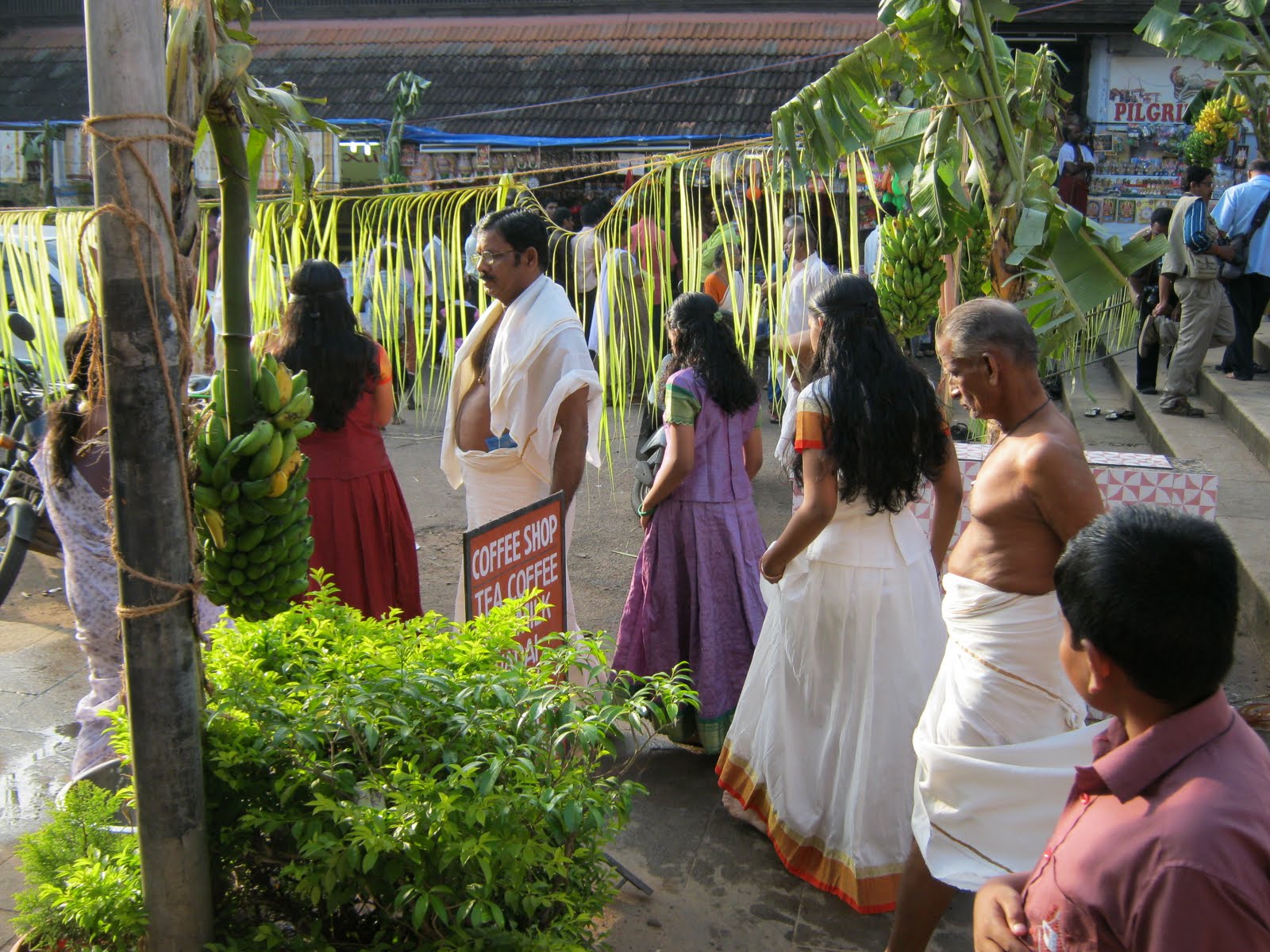
Darshan times are (before noon) 3.30-4.45, 6.30-7.00, 8.30-10.00, 10.30-11.00, 11.45-12.00; (after noon) 5.00-6.15 and 6.45-7.20. Only Hindus are permitted inside the temple. Devotees have to strictly follow the dress code. Men should remove clothes above waist and deposit in the locker room. No one is permitted to wear dress that displays both legs separately. This means no pants for men or churidhar for women. Dhotis can be borrowed at the locker room for Rs. 15. Dhotis can be worn over pants or churidhar. No cell phones or cameras are permitted inside the temple. Cell phones must be deposited in the locker room after taking it out of the bag for Rs. 15 a piece. Hand bags are permitted inside.


KNOW MORE ABOUT PADMANABHA SWAMY TEMPLE

The Padmanabha Swamy temple is now filled in the news of all kind of media here.The reports says that the value of the treasure unearthed  is very vast and could not be even counted for calculating the value.  Recent reports says that it will be more than 5 Lakh crores without calculating the antique value.  Some of the details on the temple is given for the information of public.

1. The wealth is fully owned by the the presiding deity Padmanabha Swamy. In 1750, Travancore ruler Marthanda Varma donated all the kingdom's wealth to the deity.
2. There are 6 cellar in the temple. Out of this the team appointed by the Supreme court opened 5 of them. The remaining one B cellar has to be opend.  But supreme court directed not to open the B cellar.
3.Treasure worth more than Rs 1 lakh crore found so far. It is only the physical value. The antique value will be much much more. 
4. The search on the vaults was initiated after a lawyer petitioned the Supreme Court to order a government take over of the temple as it did not have enough security.

5. The existence of the temple's staggering wealth was always known. The 1941 Pradhanapetta (important) Mathilakom Records compiled by Malayalam poet Ulloor S Parameswara Iyer mentions it. The 12-volume Kottaram (Palace) manual also talks of it.Records talk of sacred cellars from which treasure is now being dug out.
6. The royals call themselves Padmanabha Dasa (servants of Lord Padmanabha) and are pledge-bound never to take even a penny from the Lord's wealth. Royal family members who visit the shrine wipe off the sand from their feet when they leave the shrine. Family members don't take home even a speck of sand belonging to Padmanabha!
7.Though Travancore merged with the Indian Union in 1949, the management of the temple remains with royal family.
8.  The boundaries of the erstwhile Travancore state .  It extended from Kanyakumari in present-day Tamil Nadu to Aluva (in Ernakulam) in the north. Padmanabhapuram (now in Tamil Nadu) was the first capital, but it was shifted to to Thiruvananthapuram subsequently.
History of Padmanabhaswamy Temple Trivandrum

The history of Sree Padmanabhaswamy Temple dates back to 8th Century. References to the temple can be found in the Divya Prabandha canon of literature written by Tamil Alwar. Alvars are the Tamil Saint poets who lived between the sixth and ninth centuries AD. References to Sri Padmanabha Temple is also said to have in the Brahma Purana, Padma Purana, Varaha Purana, and Vayu Purana. One of the twelve Alvars, Nammalvar (8th Century) had created four slokas and one phalasruthi about Sree Padmanabhaswamy Temple.

Major Renovation of Temple by Marthanda Varma

It is believed that Sree Padmanabhaswamy Temple and its properties were maintained by Ettuveetil Pillamar – the eight powerful Nair feudal lords of ancient Travancore. Later His Royal Highness Sree Marthanda Varma Anizham Thirunal suppressed the Ettuveetil Pillais and his cousins and took over the control of the temple. Marthanda Varma has done a major renovation to the temple and it is said that the current structure of Padmanabhaswamy temple was made by the King.

History of Sree Padmanabhaswamy Temple and Maharaja Mathanda Varma

Murajapam and Bhadra Deepam Introduced in Temple
It
was Marthanda Varma who introduced the Murajapam and Bhadra Deepam festival in the temple. Murajapam, which literally means continuous chanting of prayers, is still conducted in the temple once in 6 years. Murajapam is performed when 12 Bhadradeepam joins.


Travancore was dedicated to Sree Padmanabhaswamy in 1750
In 3rd January 1750, Maharajah Marthanda Varma dedicated the kingdom of Travancore to Lord Padmanabha. Marthanda Varma vowed that the royal family will rule the state on behalf of Lord and he and his descendants would "serve" the kingdom as Padmanabha Dasa or the Servant of Lord Padmanabha. Since then the name of every Travancore King was preceded by the title Padmanabha Dasa, while the female were called Padmanabha Sevinis. The donation of the kingdom of Travancore to Padmanabhaswamy was known as “Thripadidanam”. After dedicating the kingdom to the Lord, Marthanda Varma was known as Sripadmanabha Vanchipala Marthandavarma Kulasekaraperumal. By giving the Kingdom to Lord Padmanabha, the whole Travancore state became the property of Sree Padmanabhaswamy, and hence it is very appropriate to call Kerala as “God’s Own Country” or Sree Padmanabhaswamy’s Own Country.

Travancore Kings after Marthanda Varma

After the death of Marthanda Varma in 1758, all the succeeded Kings of Travancore took great care in continuing the daily poojas and ceremonies of Sri Padmanabhaswamy Temple intact and also rule the kingdom as Padmanabha Dasa. The successors of Marthanda Varma was Dharma Raja, Balarama Varma, Gowri Lakshmi Bayi, Gowri Parvati Bayi, Swathi Thirunal, Uthram Thirunal, Ayilyam Thirunal, Visakham Thirunal, Moolam Thirunal, Sethu Lakshmi Bayi, and Chithira Thirunal. The present head of the Travancore Royal Family, Sri Uthradom Thirunal Marthanda Varma also keeps the words of Marthanda Varma and is very loyal to Sree Padmanabhaswamy and maintains the temple rituals and ceremonies intact. 

About Temple

Sri Padmanabhaswamy Temple,dedicated to Lord Vishnu in the Ananthasayanam posture is one of the most famous Lord Vishnu Temples in Kerala,South India. Also known as Sree Ananda Padmanabhaswamy Temple, this Mahavishnu Temple is located inside East Fort, in Thiruvananthapuram - the capital city of Kerala, India.Lord Vishnu is enshrined here in the Anananthasayanam posture (in eternal sleep ofyognidra), lying on Sri Anantha, the hooded snake. According to traditions, Sree Padmanabhaswamy Kshetram is believed to have been worshipped by Chandra (Moon God) and Lord Indra (the head of the Devas). Sri Padmanabhaswamy Temple is also one of the seven Parasurama kshetras in Kerala. The city of Thiruvananthapuram is named after theLord. The word Thiruvananthapuram literally means "The land of Sree Anantha Padmanabhaswamy"
Importance of the Idol

The idol of Sree Padmanabhaswamy can be viewed through three doors in the sanctum. And is made up of 12008 salagramams that compose the reclining lord. They are special because they are from Nepal, from the banks of river Gandhaki and they were brought to the temple with all pomp and gaiety on elephant top. On top of them "Katusarkara Yogam",Navaratnams, a special Ayurvedic mix, was used to give a plaster. Followers believe that the Lord has personally come in disguise and had saved many times the Travancore Kingdomfrom the clutches of enemies.

Sree Padmanabhaswamy Worshipped through 3 Doors
The garbhagriha or sanctum sanctorum of Sree Padmanabhaswamy Temple is located on a stone slab and the Lord who is seen resting on the serpent inside is viewed through three different doors. The head and chest are seen in the first door; the middle portion and hands appear through the second door and the feet are seen through the third door. His right hand is hanged over Lord Shiva. Beside him are his consorts, Sridevi and Bhudevi and Lord Brahma is seen on a lotus, which comes from the navel of Vishnu. The idol is about 18 feet long built with 10, 008 Saligram stones and covered with gold and precious stones. The distinctive feature of the temple is that it has idols of the Lord in three postures. Main idol inside the sanctum is in the reclining posture; the idol seen through the central door in the standing posture, and there is an Utsava Murthi (the idol taken out for the festival processions) in the sitting posture.
Sree Padmanabhaswamy Temple has separate shrines for Hindu deities including

1) Lord Narasimhar -The shrine of Lord Narasimha Swamy is situated outside the main sanctum sanctorum near the main door.
2) Lord Ayyappa - The temple has a separate shrine for Sree Dharma Sastha.
3) Lord Ganesh - The temple of Sree Maha Ganapathi is on the left side while entering from the main entrance. 
4) Lord Krishna - The shrine of Sree Krishna is situated near the South Entrance of the temple.
5) The shrine of Lord Rama, Seeta Devi and Lakshmana are inside the main sanctum sanctorum.
6) Sree Padmanabhaswamy Temple also has a shrine dedicated to Sage Veda Vyasa.

Other deities enshrined in the temple include Lord Hanuman, Lord Garuda, Kshetrapalan (who guards the temple), and Vishwaksena. 
Here are the details of Poojas that can be performed by devotees at Sree Padmanabhaswamy Temple in Trivandrum.

General Archanas

Astothara Archana
Sahasranama Archana
Veeda Manthrarchana
Santhanagopala Archana
Vidhya Rahagopala Archana
Swayamvara Archana
Dhanwanthari Archana
Sudarshana Archana
Lekshminarayana Archana

Sooktam Archanas - Suktham

Purusha Sooktam
Bhoo Sooktha
Purusha Sooktam
Sree Sooktham
Bhaghya Sooktham
Aikyamathya Sooktham
Narayana Sooktham
Samvatha Sooktham

Abhishekams and Offerings

Aval (Sree Krishna Swamy)
Aravana
Panchamritham
Thrimadhuram
Unniyappam (Unni Appam)
Modakam (for Sree Ganapathi)
Paal Payasam
Ghee Payasama
Sharkara Payasam
Pongal
Ottayada
Idichu Pizhinja Payasam
Milk Abhishekam
Nei Vilakku
Vada Mala (Sree Hanuman Swamy)

Sree Padmanabhaswamy Temple Darshan Timings in Morning

Sree Padmanabhaswamy Temple opens daily at 03:30 AM and closes at 07:20 PM. However, there are specific timings for darshan.

03:30 AM to 04:45 AM
06:30 AM to 07:00 AM
8.30 AM to 10:00 AM
10:30 AM to 11:00 AM
11:45 AM to 12:00 PM
Evening Darshan Timings of Sri Padmanabha Swamy Temple

05:00 PM to 06:15 PM
06:45 PM to 07:20 PM

Please note that the temple worship timings are subject to change during festival occasion.
Sree Padmanabhaswamy Temple Dress Code

Only Hindus are permitted inside the temple. And dress codes are to be strictly followed before entering the temple. Men should wear 'Mundu' or 'Dhoti' while visiting the temple. They also have to remove shirt or t-shirt above waist. Women have to wear Sari (Saree), Mundum Neriyathum (set-mundu), Skirt and Blouse, or Half Sari. This means no pants for men or churidhar for women is allowed inside the temple.

Dhotis are available for rent near temple locker room. Nowadays temple authorities allow to wear Dhotis over pants or churidhar for the convenience of devotees.
Tags:Padmanabha temple treasure, padmanabha wealth., Padmanabhaswamy temple Trivandrum and its treasure and wealth., Thiruvananthapuraram treasure, trivandrum treasure, unearthed treasure of trivandrum, 


For more details -  


Related Posts Plugin for WordPress, Blogger...